 Suntrica Solar Energy Solutions






SEARCH WHAT YOU WANT
Search allProductNews
SEARCH
A residential solar backup system helps a home keep essential power available during grid outages, unstable electricity supply, or evening peak demand. Instead of choosing one product alone, homeowners should think about the full system: solar panels, a hybrid inverter, battery storage, protection devices, and the appliances that need backup power.
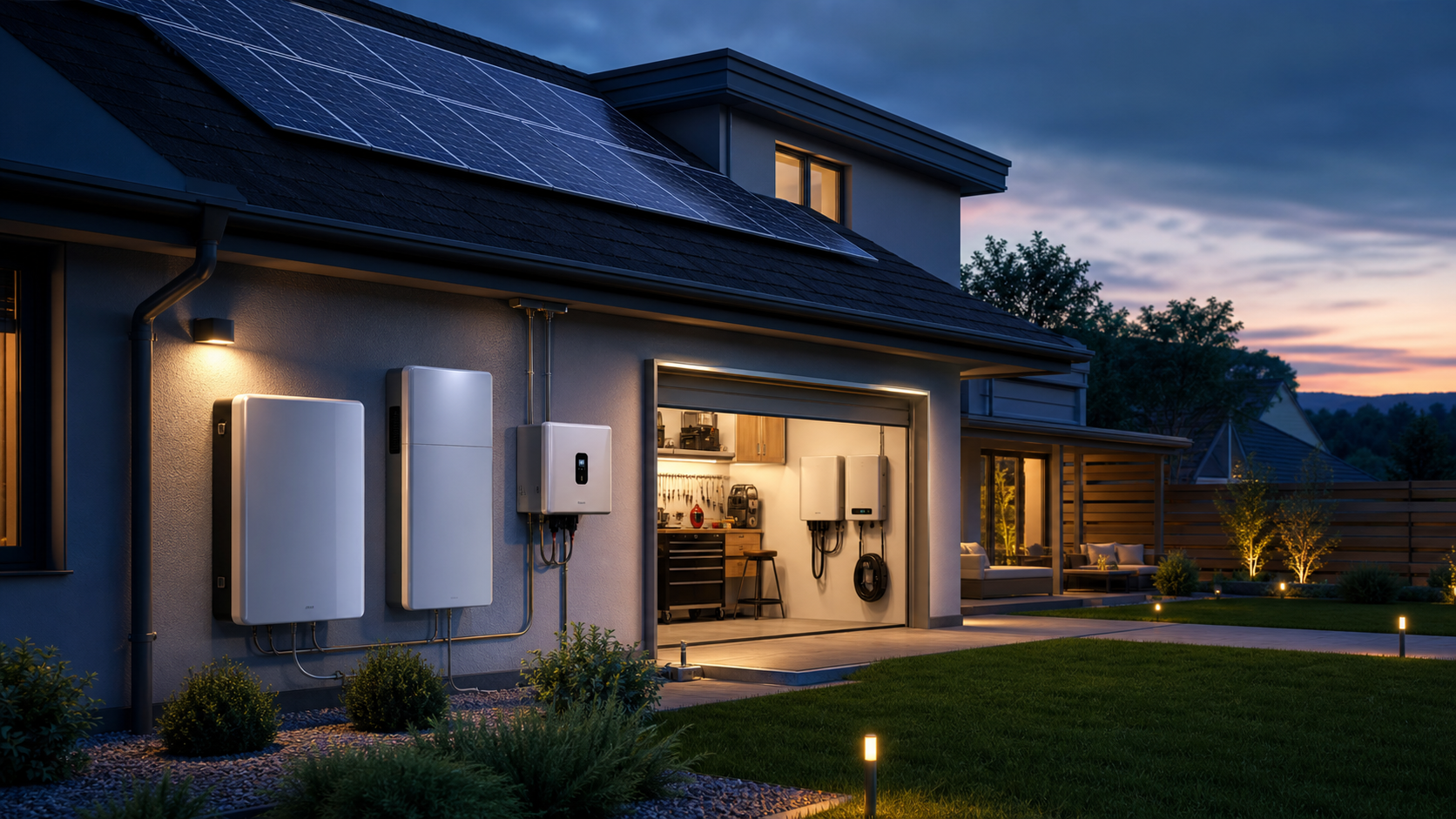
A well-matched home backup system is not only about buying the biggest battery or the highest wattage inverter. The best result comes from matching real household loads with suitable solar generation and usable battery capacity.
The first step is to decide which appliances must keep running when the grid is unavailable. Common essential loads include lights, WiFi routers, refrigerators, fans, computers, security equipment, and small kitchen appliances. Large air conditioners, electric heaters, and high-power tools may require a much larger inverter and battery bank.
For each load, check the rated power and the expected running time. Some equipment also has a startup surge. A refrigerator or pump may need more power for a short time when it starts, so the inverter must have enough surge capacity.
The hybrid solar inverter controls the relationship between solar panels, battery storage, grid input, and AC output. For home backup, the inverter should match the battery voltage, charging current, PV input range, and expected load power. Wrong matching can lead to low charging efficiency or unstable operation.
LiFePO4 batteries are widely used in residential solar storage because they offer long cycle life, stable discharge performance, and practical safety advantages. Buyers should confirm battery voltage, usable capacity, BMS protection, communication options, and inverter compatibility before ordering.
Solar panels should be selected according to available roof space, local sunlight conditions, and the amount of energy the battery needs to recover each day. A system designed only for emergency backup may use fewer panels, while a system designed for daily self-consumption usually needs more PV capacity.
Suntrica offers solar panels, hybrid solar inverters, and energy storage batteries that can be matched for residential backup applications.
Many backup systems fail to meet expectations because the load list was incomplete or the battery was selected only by nominal capacity. Usable battery capacity, depth of discharge, inverter efficiency, and backup time should all be considered. A clear project requirement helps suppliers recommend a practical configuration instead of guessing.
Many buyers search for terms such as residential solar backup system, home solar battery, LiFePO4 battery storage, hybrid solar inverter for home, and solar system quote. These keywords all point to the same practical question: how to keep essential household power available when grid electricity is unstable.
When requesting a quotation, it is better to send real load information instead of only asking for a battery price. A supplier can recommend a more suitable solar backup kit when the inverter, panels, and battery are matched together.
The right size depends on essential load power and backup time. For a small home backup system, buyers often start by calculating lights, router, refrigerator, fans, and basic appliances, then match usable battery capacity with the hybrid inverter.
Yes, a properly configured hybrid solar inverter can supply backup AC power from batteries during an outage. The actual backup time depends on battery capacity and load demand.
Send Suntrica your load list, expected backup time, battery preference, roof space, and installation country. This helps us recommend solar panels, inverter, and battery storage as one system.
If you are comparing solar panels, hybrid solar inverters, LiFePO4 batteries, solar water pumps, or a complete off-grid solar system, send your project information through the Suntrica contact page. Clear project data helps us recommend a more suitable model and quotation.
A residential solar backup system should be designed around real power demand. When the inverter, battery, panels, and loads are matched correctly, the system can provide quieter, cleaner, and more dependable backup power for daily life.
For model selection or system matching, visit Contact Suntrica and share your load list, backup time target, battery preference, and installation conditions.
Need help choosing a solar configuration? Contact Suntrica for a project quote.
A remote farm solar power system guide covering panels, battery storage, pump loads, lighting and equipment backup planning.
View details
Off-grid solar power system design guide for farms, homes and remote sites. Learn how to match solar panels, hybrid inverters and batteries.
View details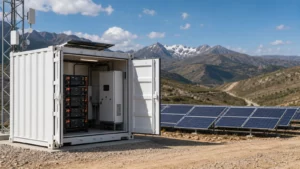
A guide to container solar power systems for remote sites including modular power, battery storage, inverter capacity and deployment needs.
View details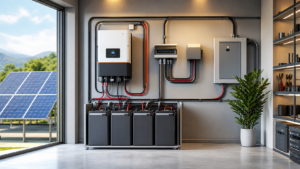
Learn how to match panels, inverter and battery capacity in one system for stable output, safer operation and longer battery life.
View detailsFor model selection, project matching or wholesale quotation, contact Suntrica, discuss cooperation, message us on WhatsApp or call +86 185 1610 1196.