 solar-machinery
SEARCH WHAT YOU WANT
Search allProductNews
SEARCH
A lithium battery plays a central role in any solar energy storage system because it determines how much energy can be stored, how quickly power can be delivered, and how stable the system remains over time. Whether the application is residential backup, off-grid living, solar water pumping, or small commercial storage, the right battery helps improve efficiency and makes the whole system more reliable.
The first thing buyers should check is the battery voltage and capacity. Common system voltages include 12V, 24V, 48V, and 51.2V, and the battery must match the inverter and overall system design. Capacity should be selected according to daily electricity consumption, backup time, and peak load demand. A battery that is too small will limit runtime, while an oversized battery may increase project cost without improving real performance.
The second key factor is charge and discharge capability. Some applications only need stable low-power backup, but others require strong output for pumps, refrigerators, air conditioners, tools, or multiple appliances at the same time. Buyers should confirm the continuous charge and discharge current, peak current, and whether the battery can support the real load conditions of the project. This is especially important for solar systems that operate in remote areas or unstable power environments.
Battery management and protection functions are also critical. A good solar storage battery should include reliable protection against overcharge, over-discharge, overcurrent, overheating, and short circuits. It is also helpful if the battery supports communication protocols such as RS485, CAN, or inverter matching functions, because this can improve compatibility with the inverter and make the system easier to monitor and manage.
Finally, buyers should consider installation environment, expansion needs, and long-term service life. Some projects need wall-mounted batteries for home storage, while others need compact batteries for outdoor equipment, mobile use, or backup power. If the system may be expanded in the future, it is better to choose a battery that supports parallel connection and flexible configuration. The best choice is not simply the biggest battery, but the one that matches the system voltage, load demand, installation space, and future plan.
Explore home energy storage solutions for backup power during outages. Learn how solar panels, inverters, and batteries work together to keep essential home appliances running reliably.
View details
Learn how small off-grid solar panels are used for cameras, street lights, and outdoor devices. Explore installation advantages, common applications, and key points for choosing the right solar setup.
View details
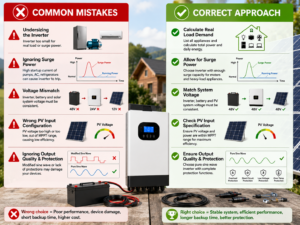
Learn the common mistakes when buying solar inverters for off-grid applications. Explore load sizing, battery matching, PV input, output quality, and key points to avoid system problems.
View details