 Suntrica Solar Energy Solutions







SEARCH WHAT YOU WANT
Search allProductNews
SEARCH
A camera beside a remote road or water-control facility may need only a modest amount of power, but it often needs that power around the clock. Solar modules can reduce the need for a long mains cable. Keeping the camera online after sunset depends on the battery, controller and actual load as much as the panels.
The site photographs in this article show pole-mounted PV modules, a camera and an equipment cabinet, followed by another solar-assisted installation beside a water facility. They illustrate useful design questions for remote monitoring; the equipment ratings and operating records for these particular sites have not been supplied.
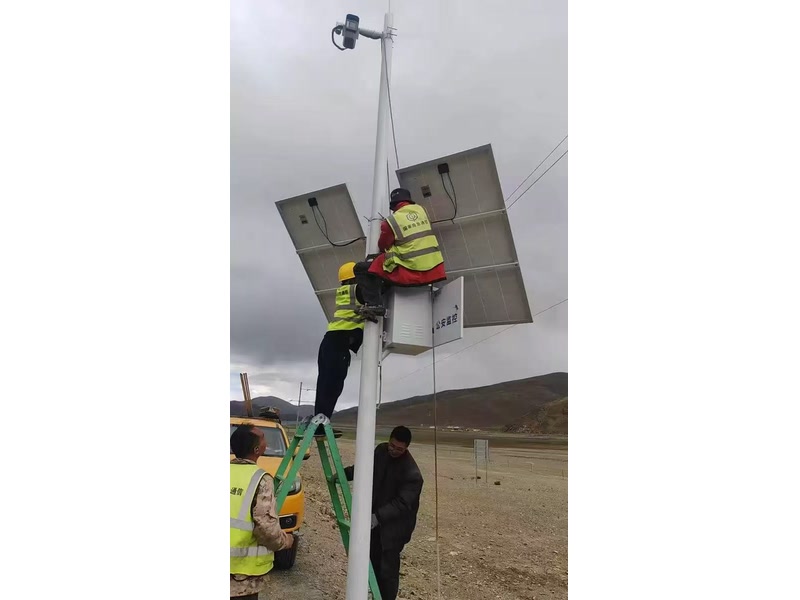
Build the load list before selecting a panel. Include the camera, infrared lighting, router or radio, recording equipment and any sensors or enclosure heaters. Use the correct operating hours for each item. A camera’s daytime consumption may differ from its night-time demand, and adding communications equipment later changes the energy budget.
As a simple planning example, a complete load averaging 20W for 24 hours uses 480Wh per day. This is an illustration, not a measurement from the photographs. Converter losses and controller self-consumption must be added when calculating the energy the battery and solar array need to provide.
Two days without useful charging would require 960Wh delivered to that example load. If the design allows 80% usable battery capacity and assumes 90% delivery efficiency, the starting nominal capacity is approximately 960 ÷ (0.80 × 0.90) = 1,333Wh. Temperature, ageing, the permitted depth of discharge and the required reliability may call for a larger reserve.
The array must also have enough capacity to restore that reserve while continuing to run the equipment. Morningstar’s off-grid sizing guidance emphasises daily loads, available solar energy and storage together, with attention to the difficult winter or rainy-season month. A report of acceptable output on one overcast day does not establish several days of autonomy.
Confirm the camera’s supply voltage and whether it needs a particular PoE standard or a regulated DC input. A battery labelled 12V or 24V does not automatically provide the exact voltage required by every device throughout its discharge cycle. Specify suitable conversion equipment and protection as part of the system.
The charge controller must match the battery chemistry, PV voltage and current, and load requirements. Low-voltage disconnect and reconnect settings also need a deliberate choice: protecting the battery can interrupt the monitoring load. Victron’s controller documentation illustrates how these load-control settings work; use the manual for the controller actually supplied.
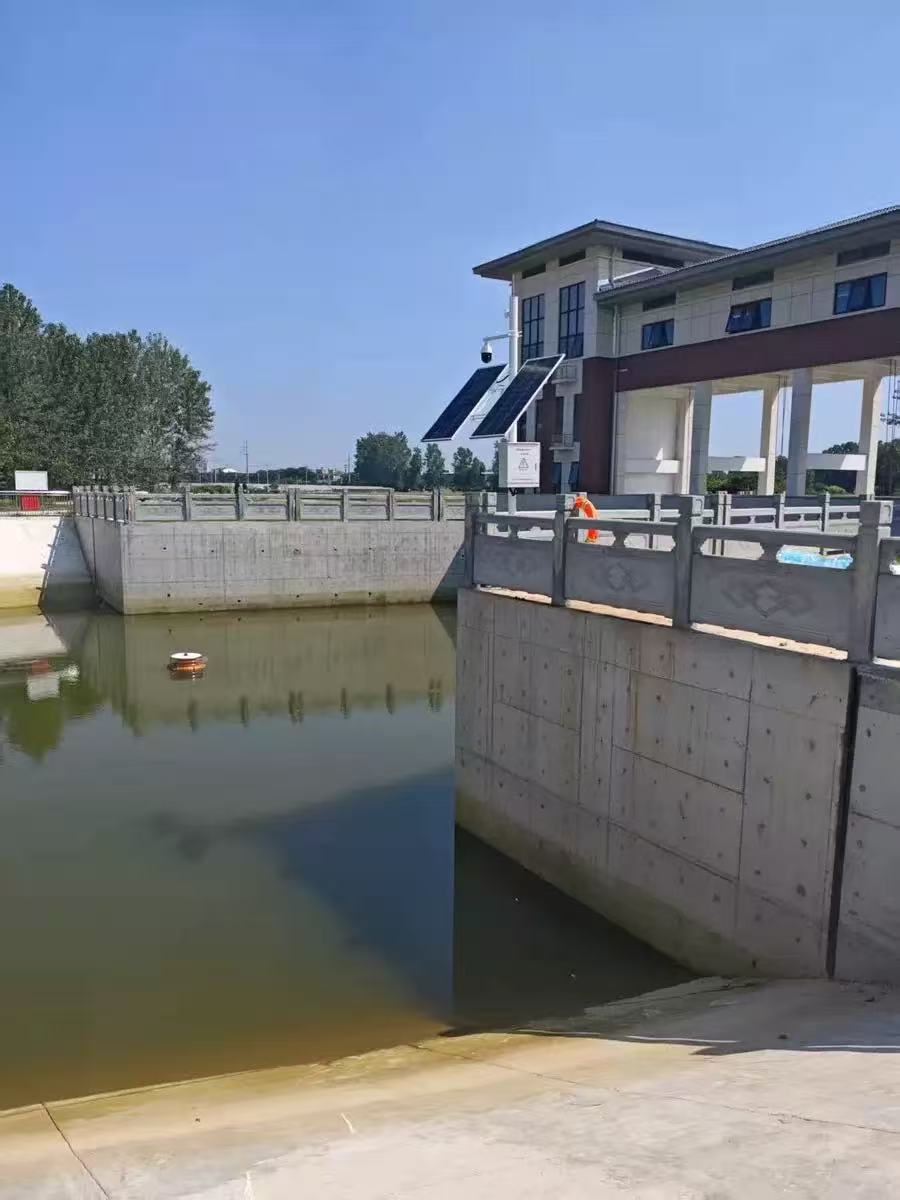
Panel dimensions and mounting-hole positions should match the bracket drawings. The pole and foundations need a design suitable for the local wind exposure and the additional panel area. Good bracket fit helps assembly, but it does not establish the structural capacity of the complete installation.
Keep cable entries, strain relief, enclosure sealing, corrosion protection and service access on the inspection list. For water-side locations, agree the cabinet position with the site operator and account for the design flood level. Installation at height and electrical commissioning should be handled by qualified personnel using the appropriate access equipment.
At handover, record daytime charging, night-time load, battery voltage or state of charge, and any low-voltage events. Check communications and image transmission under the intended operating mode. Keep the wiring drawing, settings, serial numbers and service contacts with the installation record.
For a quotation, send Suntrica the location, equipment load list, operating hours, required autonomy and mounting constraints. We can help compare suitable solar modules, batteries and complete power-system options with our supply partners. Contact us with your monitoring-site requirements.
Learn how to design a coastal island off-grid solar system for salt mist, high winds and limited maintenance, including modules, mounting, batteries and protection.
View details
Estimate panel count for a 5kW inverter with 400W to 600W modules, then check MPPT voltage, input current, cold-weather Voc and battery-charging needs.
View details
Learn how small off-grid solar panels power cameras, street lights and outdoor devices, with key points for choosing compact solar systems.
View details
Explore practical solar power applications for rooftops, street lighting and off-grid sites, with key design considerations for reliable project results.
View details