 Suntrica Solar Energy Solutions
SEARCH WHAT YOU WANT
Search allProductNews
SEARCH
A hybrid solar inverter is the control center of many solar power systems. It manages PV input, battery charging, AC output, and sometimes grid or generator input. Because it connects several parts of the system, battery matching is one of the most important steps in inverter selection.
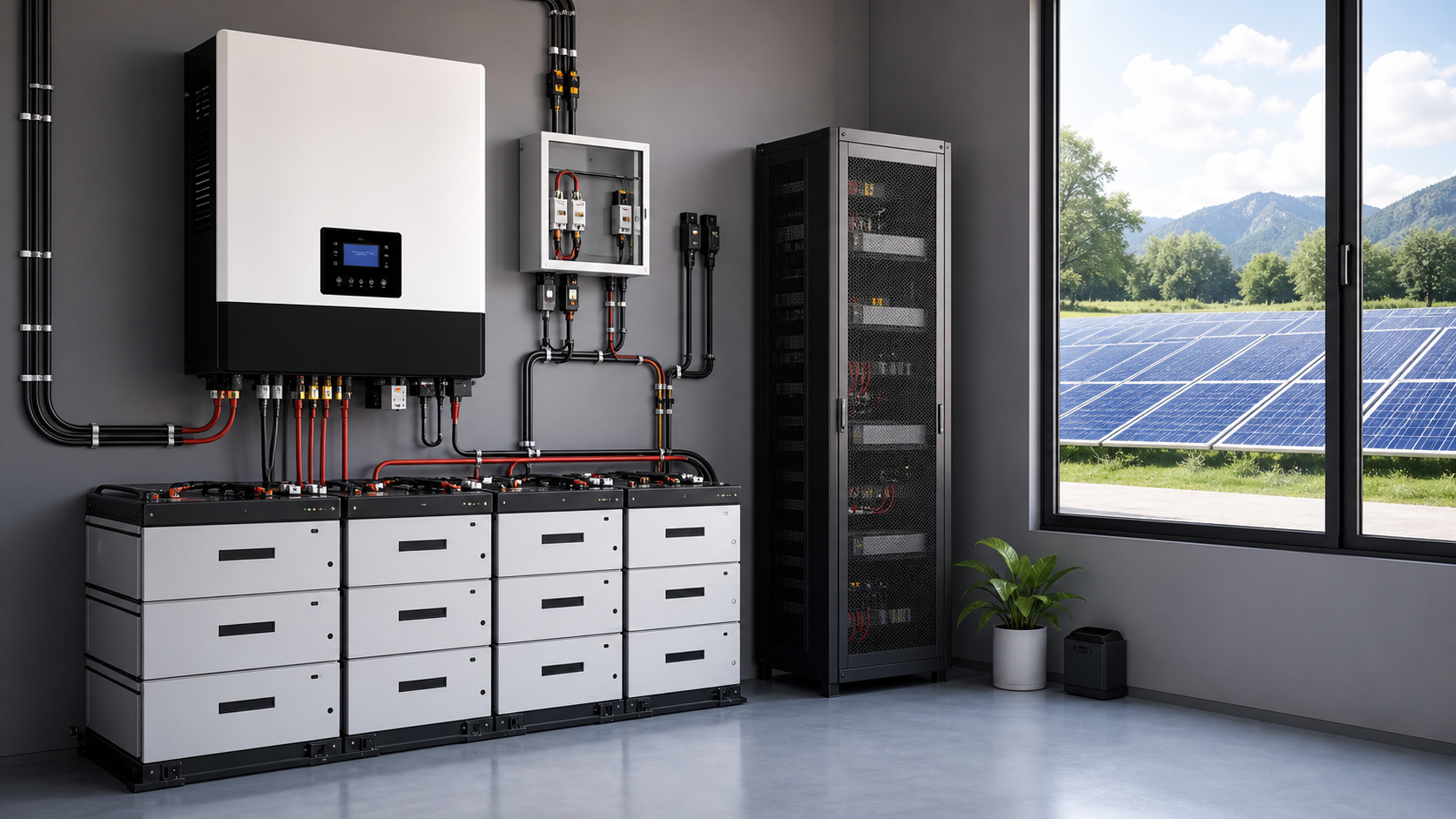
A suitable battery can improve backup time and system stability. A poorly matched battery can limit performance, cause communication issues, or prevent the system from operating safely.
The inverter and battery bank must use the correct voltage platform. Common solar storage systems may use 12V, 24V, 48V, or 51.2V batteries. A 48V inverter cannot be connected to a 12V battery bank unless the system is specifically designed for that configuration.
Before ordering, check the inverter battery voltage range and the battery nominal voltage. For lithium systems, also confirm charging voltage and low-voltage protection settings.
Battery capacity should be selected according to load demand and backup time. A larger battery is not always better if the solar panel array cannot recharge it efficiently. A smaller battery may be cheaper, but it may discharge too quickly during an outage.
The load list should include rated power, startup power, and expected running hours. This information helps calculate usable energy requirements.
Hybrid inverters have maximum charging current limits from solar, grid, or combined input. Batteries also have BMS limits for charging and discharging. The two sides should be compatible so the system can operate without overload or frequent protection shutdowns.
For LiFePO4 batteries, communication between inverter and battery may improve monitoring and control. Buyers should confirm whether CAN, RS485, or other communication options are required.
A good inverter and battery recommendation depends on the whole system. Solar panel configuration, AC load, installation environment, backup input, cable distance, and expansion plan all matter.
Suntrica provides hybrid solar inverters and energy storage batteries for off-grid and backup applications.
Common commercial search terms include hybrid solar inverter, off-grid inverter, 48V hybrid inverter, 51.2V LiFePO4 battery, solar storage inverter, and inverter battery matching. These keywords show that buyers are usually comparing compatibility and system stability.
For B2B buyers and installers, the most important point is not only inverter price. Voltage platform, charging current, communication protocol, surge capacity, and battery BMS limits should be checked together.
Many 51.2V LiFePO4 batteries are designed for 48V-class solar storage systems, but buyers must still confirm inverter voltage range, charging voltage, and communication compatibility.
An undersized inverter may overload, shut down, or fail to start motors and compressors. Always check continuous load and startup surge.
Expansion is possible in many systems, but batteries should use compatible voltage, BMS settings, model type, and installation method. Planning expansion before purchase is safer.
If you are comparing solar panels, hybrid solar inverters, LiFePO4 batteries, solar water pumps, or a complete off-grid solar system, send your project information through the Suntrica contact page. Clear project data helps us recommend a more suitable model and quotation.
Correct matching between a hybrid inverter and battery storage helps a solar system run more safely and efficiently. Before purchasing, confirm voltage, capacity, current, communication, load demand, and future expansion needs.
If you are unsure which configuration is suitable, share your project details with Suntrica for model selection support.
Need help choosing a solar configuration? Contact Suntrica for a project quote.
Understand why pure sine wave inverters matter for sensitive electrical loads, home backup systems and off-grid solar power applications.
View details
Learn how to choose a lithium battery for solar energy storage. Explore battery voltage, capacity, discharge performance, protection features, compatibility, and key buying considerations for solar systems.
View details
Learn how to plan a residential solar backup system with solar panels, hybrid inverter, LiFePO4 battery storage and essential load matching.
View details
See what information suppliers need before quoting an off-grid solar system, including load list, backup time, battery needs and site conditions.
View detailsFor model selection, project matching or wholesale quotation, contact Suntrica, discuss cooperation, message us on WhatsApp or call +86 185 1610 1196.