 Suntrica Solar Energy Solutions







SEARCH WHAT YOU WANT
Search allProductNews
SEARCH
Choose a solar water pump controller by matching the exact pump motor, rated voltage and current, permitted PV input and required protection functions. A matching wattage label alone is not proof of compatibility. Obtain written confirmation of the pump, controller and solar array combination before ordering.
This guide is for buyers sourcing a new solar pumping system or a replacement controller for a farm, borehole or livestock water supply. It is a procurement checklist, not an installation or wiring manual.
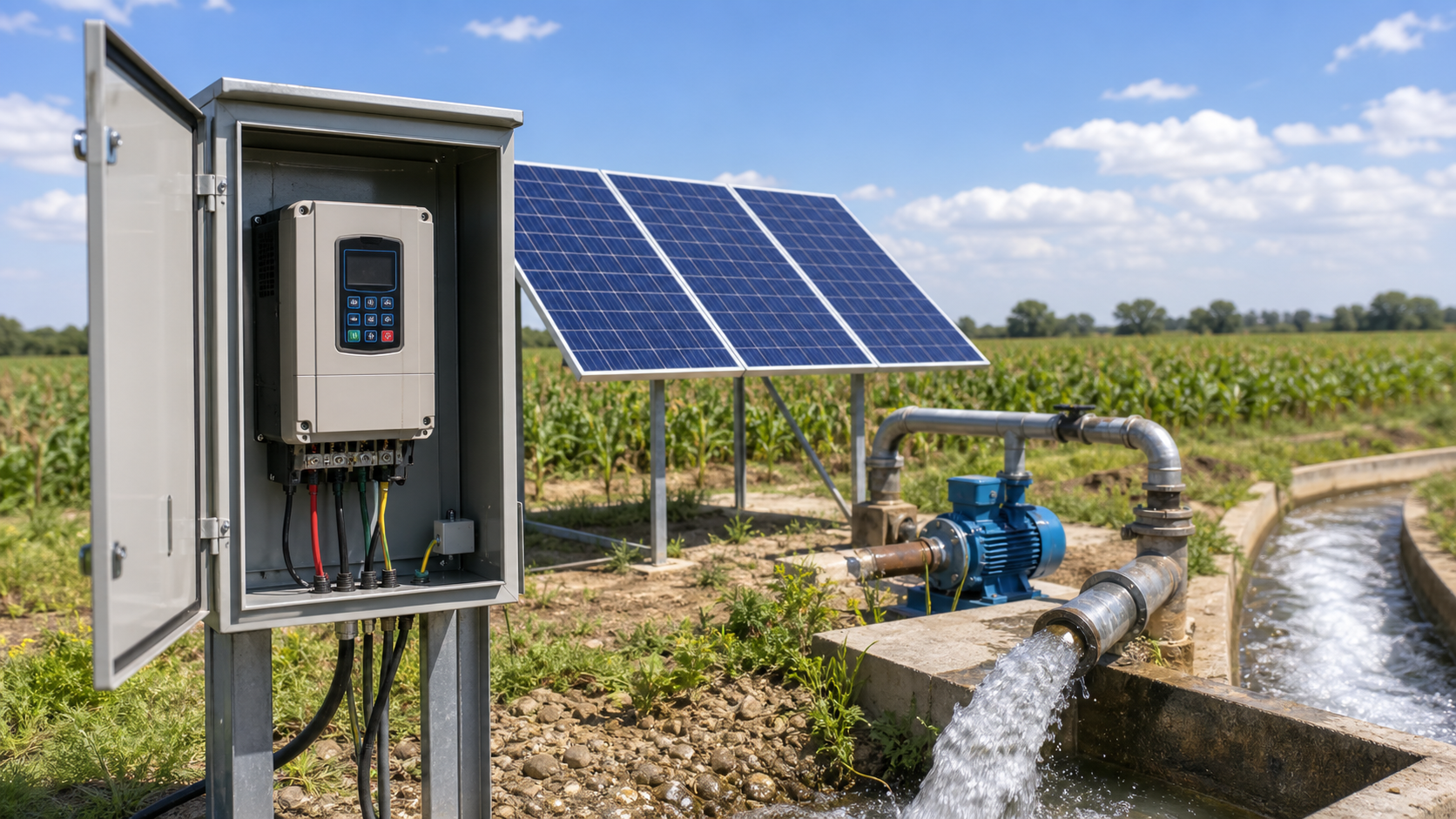
Start with photographs of the pump and existing controller nameplates. Record the motor type, rated voltage, current and power, and the exact model number. For an AC motor, record its phase and frequency as well. A DC solar pump controller, an AC pump drive and a household hybrid inverter are not automatically interchangeable.
DIFFUL describes MPPT, status displays and speed control in its solar pump controller technology overview. These are family-level descriptions. Confirm which functions are provided by the exact controller revision quoted for your pump; do not copy another model’s limits into a purchase order.
Voc is open circuit voltage; Vmp is voltage at maximum power. They answer different compatibility questions. Victron’s PV array design guidance illustrates why low-temperature Voc needs checking, but its numerical limits apply to that Victron equipment, not to a Suntrica-supplied pump controller. See our solar panel voltage matching guide for the information to request.
A tank full signal and protection against insufficient source water serve different purposes. Ask whether the system uses water probes, an approved sensor or another manufacturer-defined dry run detection method. Confirm whether sensors, signal cable and any required connectors are included.
DIFFUL’s tank float switch explanation describes both tank control and low water cutoff. It does not remove the need to check your quoted accessory package, input logic and restart behaviour. Our dry run protection and tank level control guide explains the distinction.
Do not bypass a protection function to keep a pump running. Repeated stops require checking the fault indication, water level, source recovery and approved controller settings. Installation and electrical inspection should be performed by a qualified installer following the supplied manuals and local requirements.
Electrical compatibility does not establish how much water the system will deliver. Confirm the required flow at total dynamic head using the selected pump curve. Daily yield also depends on available sunlight, source yield and the system design. Start with our solar water pump sizing guide.
Where suitable, stored water can separate daytime pumping from later water use. A tank does not make the controller operate at night. Compare the requirements in our guides to solar pumping without batteries and water storage tank sizing.
These pages provide starting points for an enquiry, not a claim that one controller works with all these pumps. Send the complete model number and duty requirement when asking for a matched controller.
For model-specific electrical examples, review the 300W 24V narrow well pump and the 600W 72V farm water supply pump. Each page separates nominal motor voltage from the catalogue PV input range and includes its supplier performance curves. Their controllers and array configurations are not interchangeable by assumption.
For a broader shortlist, compare the solar irrigation pump selection page, deep well DC pump selection page and solar water pump catalogue.
No. Check motor type, voltage, current, controller output and PV input limits together. A higher wattage rating does not by itself establish compatibility.
No. A battery charge controller regulates charging of a battery. A pump controller or drive operates a compatible pump motor. Use only the configuration approved for the equipment supplied.
Do not assume it. Ask for the exact protection method, required sensors, supplied accessories and activation instructions for the quoted controller.
Only after compatibility is confirmed. Send both nameplates, the motor information, PV array details and any fault record. Matching enclosure appearance or rated power is not enough.
No. MPPT helps use available solar input. Actual flow still depends on sunlight, total dynamic head, the pump curve, water availability and system losses. Maximum head and maximum flow should not be treated as one operating point.
Suntrica is a solar equipment trading and supply business. We coordinate product information and matching enquiries with the supplying manufacturer; we do not present this guide as a manufacturer’s installation manual. Send your country, daily water demand, site measurements, pump nameplate and existing panel details through Contact Us or email sunny@solar-machinery.com. For distributor enquiries, use our cooperation page.
Guide reviewed 20 September 2026; related product links updated 22 September 2026 by Suntrica. Final compatibility, installation and commissioning must be confirmed for the exact equipment supplied.

Plan solar OEM ODM cooperation with sample acceptance, batch release checks, revision control and private-label certification review for each product.
View details
Define an off-grid rural home's included appliances, night use and poor-weather plan. Use a household energy schedule before choosing panels and storage.
View details
Plan remote farm solar around seasonal work, water storage, cold rooms and night loads. Use a service-priority sheet and check backup responsibilities.
View details
Estimate panel count for a 5kW inverter with 400W to 600W modules, then check MPPT voltage, input current, cold-weather Voc and battery-charging needs.
View details