 Soluciones de energía solar Suntrica








BUSCA LO QUE QUIERAS
Buscar en todoProductoNoticias
BUSCAR
A container solar power system is a project package, not a guarantee that every part of the remote-site installation is finished. Before comparing prices, establish what is assembled inside the enclosure, how the solar array is deployed, and who completes the foundations, external wiring and commissioning.
A shipment of panels, inverters and batteries packed into a freight container is different from a wired, tested power station built into one. The purchase specification should identify which arrangement is offered. This guide helps project contractors define that boundary before ordering.
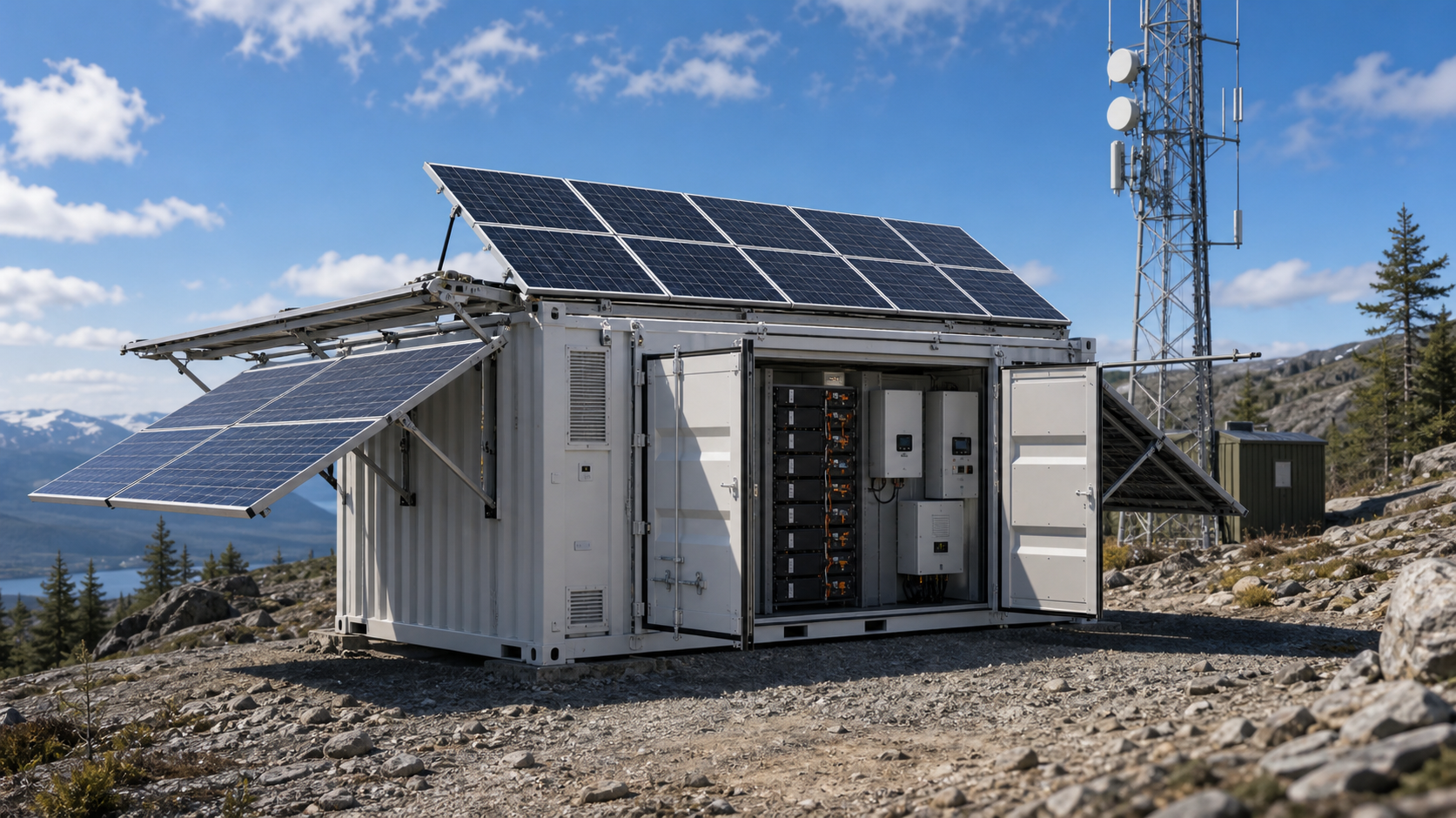
Start with the operating role. Will the installation power an isolated construction camp, support an existing generator, or back up selected circuits during grid failures? These duties need different control behaviour. An inverter that operates with a live grid is not automatically able to establish the local supply after a complete shutdown.
Record the required AC voltage, frequency, phase arrangement and essential loads. Include motors and tools with startup demand, as well as cooling and controls that consume energy inside the container. For phase allocation, use the separate single-phase and three-phase selection guide. Container size does not determine the electrical output.
Also define a stop condition: which services may be shed when energy is low, which must continue, and whether a generator can be dispatched. Do not accept an autonomy promise that omits the load schedule and the conditions under which it was calculated.
Ask for both drawings. The transport drawing identifies the packed dimensions, mass, centre of gravity and approved lifting arrangements. The operating drawing shows deployed panels, service doors, ventilation, cable routes and the space needed for maintenance. A unit that fits on a truck may require a much larger usable area once deployed.
In the historical Faber Energy Container example published by Victron in 2020, the array unfolds from the container and the installation includes backup and remote monitoring arrangements. That illustrates why the deployment method matters. Its capacities and setup claims are not specifications for a Suntrica supply.
Check the last part of the journey, not just the seaport: road access, turning space, ground conditions, lifting equipment availability and access during the wet season. The responsible contractor must approve unloading, foundations and anchoring for the actual delivered assembly. Do not derive a lifting plan from a marketing image.
The following is a proposed buyer record. For each row, put a named responsible party, drawing or document reference, and acceptance date into the project scope. An item marked optional or excluded needs an owner before shipment.
| Interface | Evidence to request | Responsibility to assign |
|---|---|---|
| Enclosure and transport | Packed and operating drawings, mass and handling instructions | Supplier, freight provider and unloading contractor |
| Foundations and array | Site layout, supports, anchoring and drainage review | Local civil and structural contractor |
| External power connections | Single-line diagram, terminal schedule and protection design | System integrator and local electrical installer |
| Generator or grid interface | Permitted operating modes and source-transition sequence | Controls integrator and relevant site authority |
| Cooling and auxiliary loads | Environmental limits, energy allowance and failure response | Equipment supplier and commissioning lead |
| Monitoring and communications | Connection method, data ownership and alarm delivery test | Site operator and communications provider |
| Service and spares | Access method, replaceable parts and escalation contacts | Supplier and local maintenance provider |
This approach is consistent with treating a microgrid as a staged project. The US Department of Energy project-development overview separates planning, design, procurement and implementation. Its federal-agency context does not replace approvals in the destination country.
A factory acceptance test should have an agreed scope and measurable pass criteria for the purchased configuration. Request the equipment list with model revisions and serial numbers, the installed settings record, and a report showing which functions were actually demonstrated.
Useful demonstrations may include communication between the battery and converter, response to a permitted load step, alarms and the specified source-change sequence. State whether tests use the complete supplied assembly, a simulator or substitute equipment. A video of an inverter display is not evidence that the full project load was tested.
Record limitations rather than hiding them. Actual local earthing, external cable routes, weather exposure and the receiving site’s generator may not be available at the factory. Those items belong in the site acceptance plan. Do not request unsafe fault creation or bypassing protective functions to produce a demonstration.
After delivery, qualified personnel should inspect transport condition, verify the installed configuration against the approved drawings and complete the applicable electrical and site-safety checks before energization. The commissioning plan should then exercise the agreed normal, low-energy, backup and recovery modes with representative permitted loads.
Check monitoring from the operator’s actual location. Confirm that an alarm reaches a named person, that timestamps are useful, and that loss of the communications connection is distinguishable from a healthy system. A dashboard that worked on the factory network is not proof of connectivity at a remote mine or camp.
The handover should include operating boundaries, isolation and emergency instructions, configuration backups, maintenance tasks and the process for obtaining spares. Applicable fire, environmental and electrical requirements need project-specific review; an enclosure or component certificate alone does not establish approval of the completed installation.
No. It can reduce some assembly work, but the site connections, deployed array, foundations, approvals and commissioning still need an agreed scope. Ask for an explicit list of exclusions.
Only where the power equipment, protection and controls are designed for that expansion. Spare physical space or matching output labels do not prove that units may operate together.
No. It verifies the agreed factory configuration and test conditions. Site acceptance checks the delivered equipment together with the actual local installation and operating interfaces.
Send the load schedule, site layout, transport constraints, available generator or grid details, and the responsibility table through Contáctanos. Suntrica can coordinate supplier documents and component enquiries through its off-grid system matching service. A pre-integrated container, its exact equipment and its acceptance requirements must be confirmed in the project quotation.
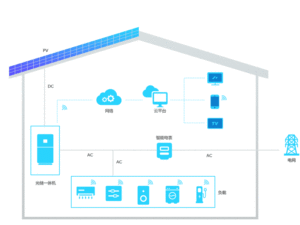
Match a LiFePO4 battery with a solar inverter by checking voltage, usable energy, BMS current, charging limits, surge power and communication protocols.
Ver detalles
Plan remote farm solar around seasonal work, water storage, cold rooms and night loads. Use a service-priority sheet and check backup responsibilities.
Ver detalles
Size solar power for street lights and security cameras from timed loads, night operation and cloudy-day recovery. Check battery reserve, PoE and mounting.
Ver detalles
Plan solar OEM ODM cooperation with sample acceptance, batch release checks, revision control and private-label certification review for each product.
Ver detalles