 Suntrica — решения в области солнечной энергетики







НАЙДИТЕ ТО, ЧТО ВАМ НУЖНО
Поиск по всему сайтуПродуктНовости
ПОИСК
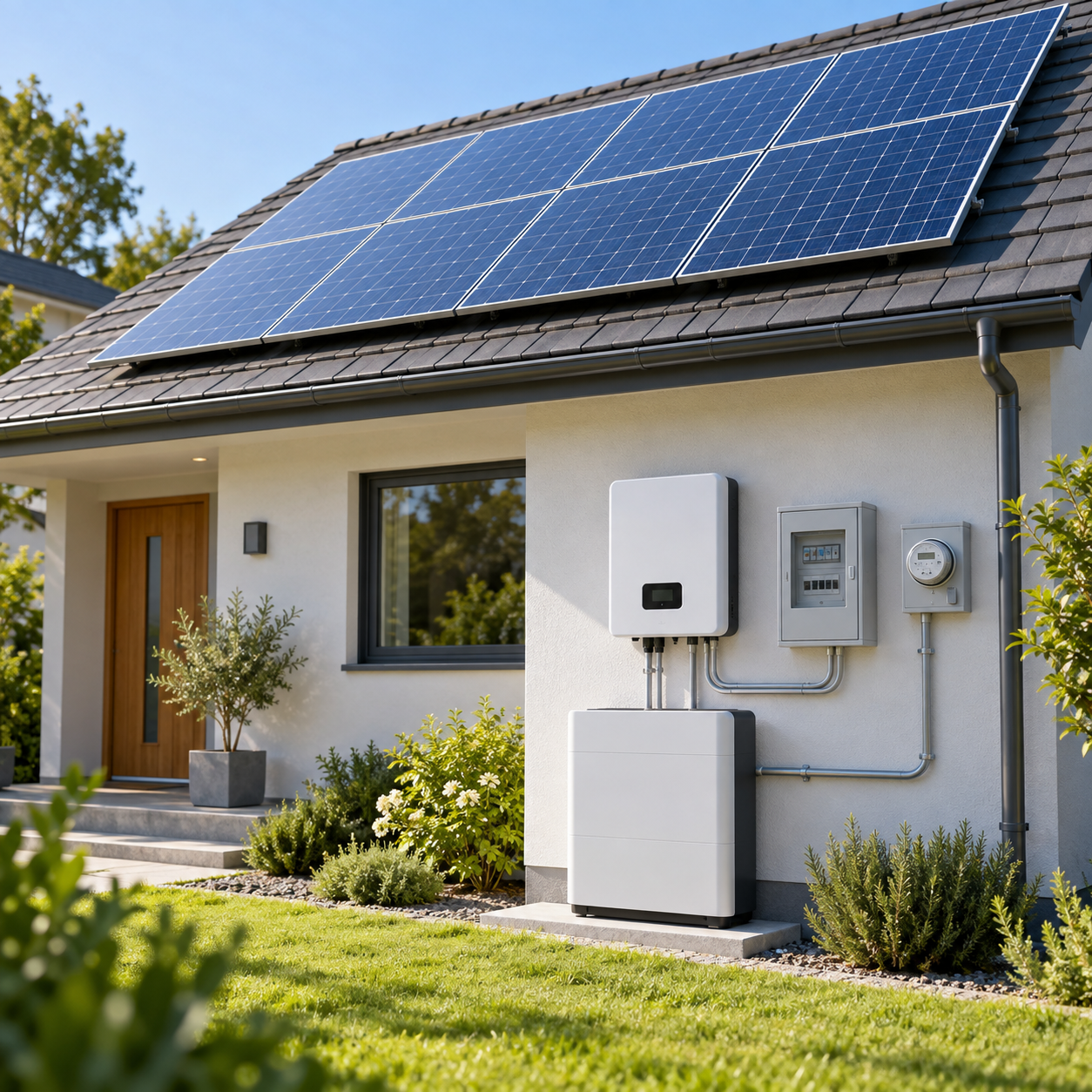
A small home solar power system can reduce dependence on the grid, provide electricity in remote locations or support selected loads during outages. The equipment list may look simple, but good results depend on matching the system to the household's actual energy use, site conditions and local electrical requirements.
There are three common configurations for small residential projects:
Your system type determines the inverter, battery, protection equipment, metering and control strategy. Confirm local utility and permitting rules before purchasing hardware.
System sizing begins with a load list. Record each appliance's rated watts, expected hours of use per day and whether it has a motor or compressor. Add the watt-hours to estimate daily energy consumption in kilowatt-hours (kWh).
Daily energy (Wh) = Appliance power (W) × Operating time (h)
Daily energy determines how much solar generation and battery capacity you may need. Peak power is different: it is the maximum combined load that may operate at the same time. Refrigerators, pumps, air conditioners and power tools can also have short startup surges, so the inverter must be selected for both continuous and surge demand.
Review electricity bills for seasonal changes and consider future loads such as an electric vehicle, water heater, larger pump or additional air conditioning. Reducing unnecessary loads before sizing can lower the cost of the entire system.
Convert sunlight into DC electricity. Compare rated power, efficiency, dimensions, temperature coefficient, mechanical ratings and warranty.
Secures the array to the roof or ground and must suit the structure, wind conditions, corrosion environment and required panel orientation.
Converts panel DC power into AC power for household appliances. Hybrid models can also manage batteries and backup loads.
Stores energy for night use or outages. Battery energy in kWh and discharge power in kW must both meet the intended load.
PV-rated cables, connectors, isolators, overcurrent protection, surge protection, grounding and enclosures must be correctly specified.
A utility-approved meter may be required for grid connection. Monitoring helps verify energy production, consumption and system alarms.
A preliminary array estimate can be made from daily energy demand, local peak-sun-hours and an allowance for real-world losses:
PV size (kW) ≈ Daily energy (kWh) ÷ Peak-sun-hours ÷ System factor
For example, a household using 6 kWh per day in a location with 4 peak-sun-hours might require approximately 2 kW of PV when using a 0.75 preliminary system factor: 6 ÷ 4 ÷ 0.75 = 2 kW. This is an initial estimate only. Weather, seasonal variation, shading, panel temperature, orientation, inverter losses and battery charging losses must be considered in the final design.
Tools such as NREL's PVWatts can estimate grid-connected solar production using the project location, array size, tilt, orientation and system-loss assumptions.
Inspect the roof before installing a long-life solar array. Confirm the remaining roof service life, structural capacity, waterproofing method and safe access. Replacing an aging roof after installing panels can add unnecessary removal and reinstallation costs.
Evaluate shading from trees, nearby buildings, chimneys and roof features throughout the year. The best orientation and tilt depend on location and load profile; a qualified designer should model the site rather than applying one rule everywhere. Where the roof is unsuitable, a ground-mounted array may be a better option.
Do not choose an inverter only by matching its kW rating to the solar array. Verify the inverter's maximum PV voltage, MPPT voltage range, maximum input current, AC output, phase arrangement, surge capability and compatibility with the selected battery.
If backup power is required, separate essential loads—such as lighting, communications, refrigeration and selected outlets—from high-demand loads where practical. Battery sizing should be based on the energy needed during the required backup period, allowable depth of discharge, conversion losses and the battery's permitted charge and discharge power.
A battery is not mandatory for every grid-connected system. It is valuable when the project needs outage protection, time-of-use energy shifting or off-grid operation, but it increases cost and requires additional electrical and fire-safety planning.
Residential solar involves hazardous DC voltage, roof work and connection to a building's electrical system. Installation should be designed and completed by qualified professionals in accordance with local electrical, structural and fire requirements.
For a grid-connected system, consult the utility early. Permits, inspections, interconnection approval and an appropriate meter may be required before the array can legally export or operate in parallel with the grid. Requirements vary by country and municipality, so equipment should not be ordered solely from a generic online diagram.
Send us your location, daily energy use, peak loads, available installation area, grid details and backup requirement. Suntrica can help match solar panels, inverter and battery options for the target application.
Compare off-grid and hybrid solar inverters by grid connection, battery use, backup operation, PV input, generator support and future expansion.
Посмотреть подробности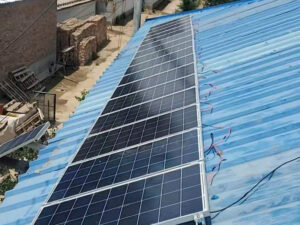
Size a home off-grid solar system from daily energy, peak load, surge power, peak-sun-hours, battery autonomy and PV charging requirements.
Посмотреть подробности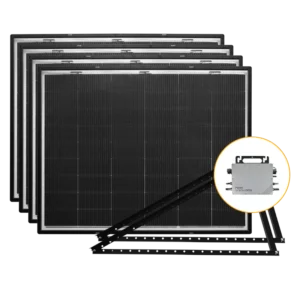
Configurable North American plug-in solar system with flexible or lightweight panels, matched microinverter and mounting options up to the 1200W AC class.
Посмотреть подробности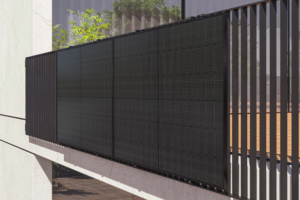
Compact 800W balcony solar kit with four 200W flexible panels, an 800W microinverter, AC cable and DC extension leads for residential PV projects.
Посмотреть подробности