 Suntrica - Solutions d'énergie solaire







RECHERCHEZ CE QUE VOUS VOULEZ
Rechercher dans tout le siteProduitActualités
RECHERCHE
Solar Panel Wattage and Battery Capacity Matching Guide is written for solar system buyers installers and technical distributors who need a practical way to compare products before sending an inquiry. The right solar panel wattage and battery capacity matching should match the real application, not only the lowest product price.
For off grid hybrid and backup solar systems, buyers usually need clear equipment matching, safe installation planning, and reliable supplier support. Suntrica helps buyers compare solar panels, solar inverters, lithium batteries, solar water pumps, and complete solar power systems according to real project data.
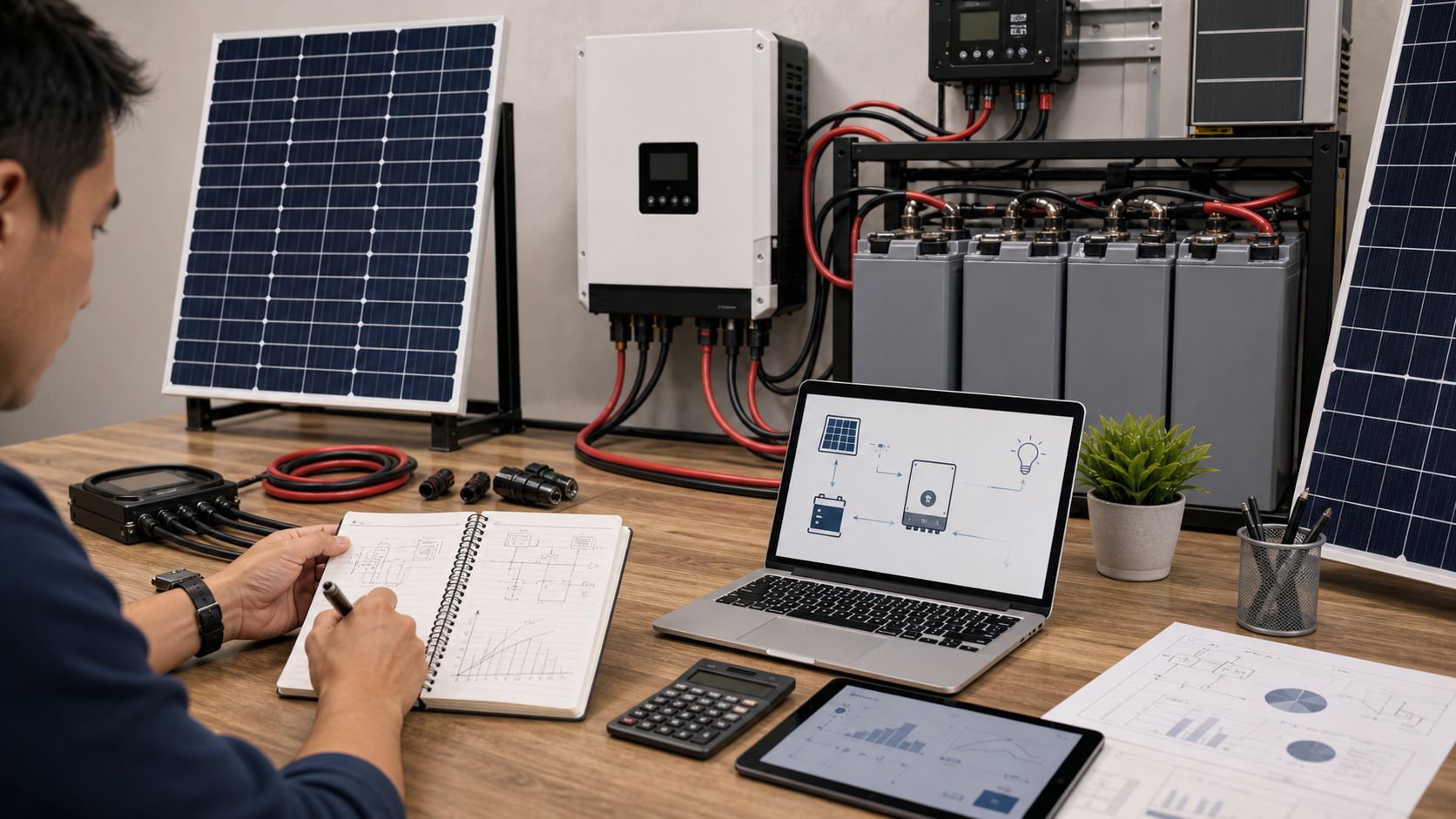
Solar equipment works as a system. A panel array, inverter, controller, battery, pump, cable and protection device may all look correct on a quotation sheet, but the system can still perform poorly if the components are not matched. This is why serious buyers should provide application details before asking for a final model and price.
When suppliers understand the working environment, load behavior, backup requirement and installation limits, they can recommend a more suitable configuration. This reduces procurement risk, avoids unnecessary product changes, and helps the buyer compare quotations on the same technical basis.
These points should be reviewed together. For example, increasing battery capacity may require higher charging power, thicker cables, or a different inverter. Increasing pump capacity may require more solar panels and a controller with a wider input range. A complete configuration is usually more valuable than a single product price.
When comparing suppliers, ask whether the quotation explains the main assumptions. A useful quotation should show the model, quantity, voltage, capacity, application range, and key accessories. It should also mention whether the system is designed for daily use, emergency backup, water pumping, remote power, or commercial operation.
For B2B buyers, export packaging, documentation, warranty communication and long term supply stability also matter. A lower initial price may not be the better option if the system needs additional parts later or if the buyer must solve matching problems alone after delivery.
The best way to avoid these mistakes is to start with actual use conditions. If the buyer is unsure about a load list, pump requirement, battery capacity or inverter size, it is better to send the available project information first and let the supplier help organize the configuration.
Clear information helps shorten quotation time. It also helps Suntrica recommend whether the buyer needs individual solar products or a complete matched system. For project buyers, this can reduce repeated communication and make price comparison more accurate.
Yes. Send the application, load data, location and backup requirement. Suntrica can help match solar panels, inverter, battery storage, water pump or related accessories according to the project.
No. Solar equipment should be compared by performance, compatibility, warranty, installation requirements and long term reliability. A matched system usually reduces hidden costs after delivery.
Prepare the load list, application scenario, installation country, target backup time and preferred product type. Then send the details through the Suntrica contact page or the cooperation page.
If you need solar panels, hybrid solar inverters, LiFePO4 batteries, solar water pumps, or a complete solar power system, contact Suntrica with your project information. A clear inquiry helps us reply with a better configuration and a more useful quotation.
Estimate daily energy use, backup time and available sunlight first, then size panel wattage and battery capacity with enough margin for losses and cloudy days.
Yes, but the inverter or charge controller must support the voltage and current. Oversizing without checking controller limits can cause faults.
12V, 24V and 48V systems are common. Larger systems often use higher voltage battery banks to reduce current and improve efficiency.
For product matching, wholesale supply or OEM ODM cooperation, send your project details through Nous contacter or visit the Coopération page.
Comparez les onduleurs solaires monophasés et triphasés destinés aux particuliers, aux exploitations agricoles et aux installations commerciales, en tenant compte notamment de la tension, de l'équilibrage de charge et des conseils de sélection.
Voir les détails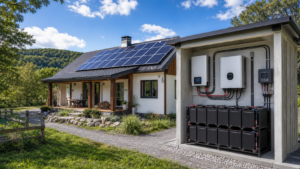
A practical off grid solar system buying guide for rural homes, farms and remote sites, covering panels, inverter, batteries and load planning.
Voir les détails
Guide de collaboration en matière d'énergie solaire pour les fabricants OEM et ODM, couvrant la sélection des produits, la personnalisation, le conditionnement, les échantillons et la planification de l'approvisionnement à long terme.
Voir les détails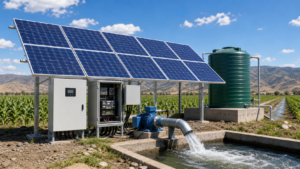
Comprendre les facteurs influant sur le coût d'un système de pompage solaire destiné à l'agriculture, notamment la puissance de la pompe, la hauteur de refoulement, les panneaux solaires, le régulateur, l'installation et les besoins en eau.
Voir les détails