 Soluciones de energía solar Suntrica








BUSCA LO QUE QUIERAS
Buscar en todoProductoNoticias
BUSCAR
Size a solar pumping tank around water demand and the time supply may be unavailable, then check whether the pump can refill it. Tank capacity is not determined by pump wattage alone. The useful volume, seasonal pumping output and distribution pressure must work together.
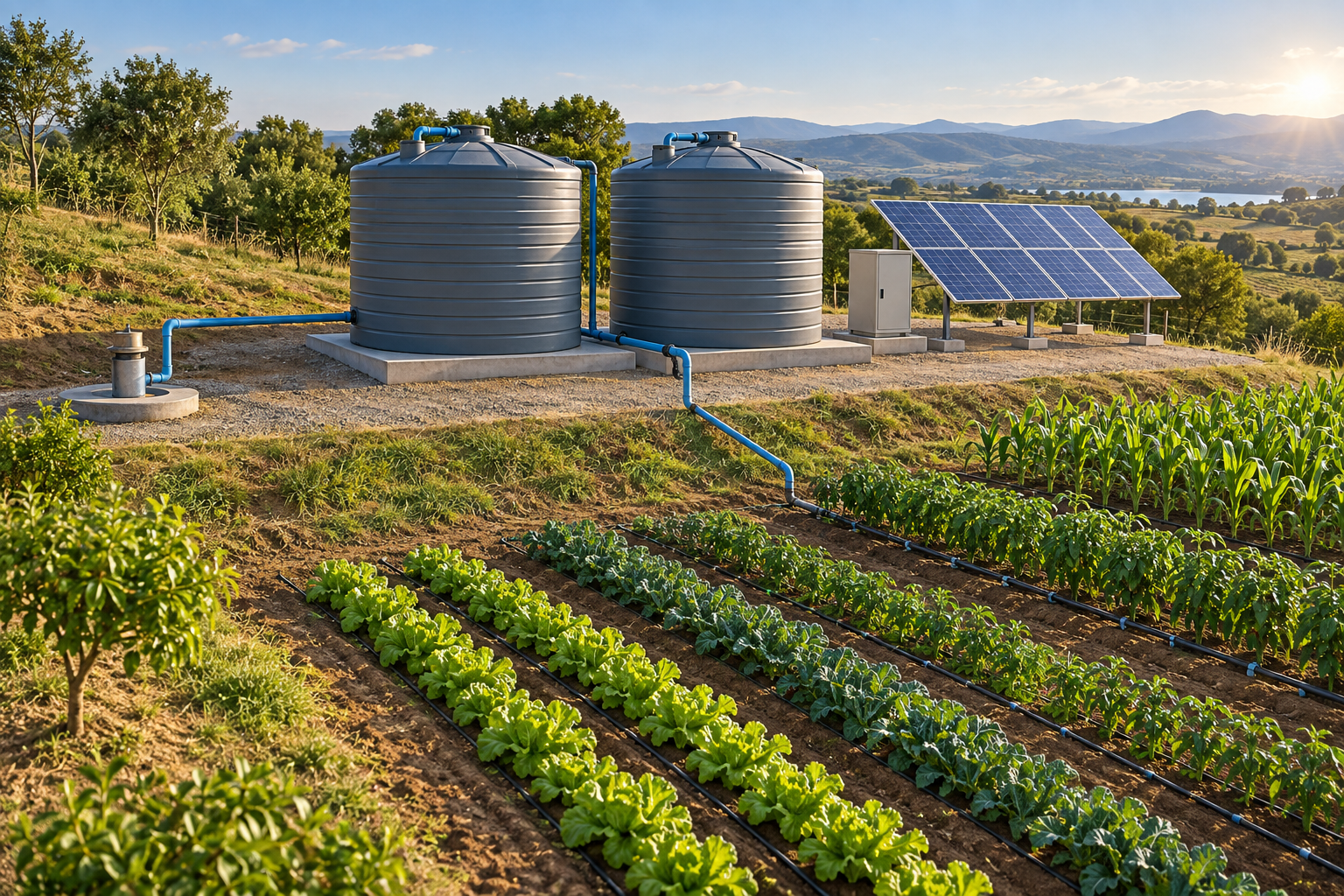
Water storage can allow daytime pumping to serve demand at a different time. FAO describes solar pumping arrangements that store water for later gravity distribution. This can suit some low pressure irrigation systems, but the available elevation and pipe losses still matter. See the FAO hosted introduction to solar powered water lifting.
A tank on nearly level ground does not automatically provide the pressure required by sprinklers or a pressurised irrigation network. A designer should check the distribution system separately, including any need for a booster and its power supply.
Screening reserve volume = daily demand x selected no supply period. Use consistent units and treat this as an initial planning check, not a complete tank design.
For example, assume a project needs 12 cubic metres per day and the owner chooses a 1.5 day period with no replenishment. The usable reserve is 12 x 1.5 = 18 cubic metres, or 18000 litres. The nominal tank size would have to account for water below the usable outlet, operating level limits and any separately justified allowance. The example does not establish that 1.5 days is sufficient for your climate.
For an operating design, compare supply and demand through time. In each time interval, the next stored volume equals the previous volume plus pumped inflow minus use and losses, bounded by the tank’s operating levels. This reveals both shortages and overflow that a single daily average can hide.
The water source must also support the proposed abstraction. FAO recommends combining storage with demand management and groundwater monitoring in its water harvesting and storage guidance. More storage does not create additional sustainable well yield.
Where the water source and suction arrangement suit an above-ground pump, the 750W DCPM surface transfer pump is a different configuration to a borehole submersible. Its catalogue maximum head is 14 m, so check destination elevation, pipe losses and the exact duty curve before evaluating refill capacity. Tank filling and downstream irrigation pressure remain separate design checks.
It can store water for later use in a suitable system. It does not supply electricity or guarantee delivery pressure. Read our guide to bombeo solar sin baterías.
No. Required reserve depends on weather, demand, acceptable interruption and any backup supply. Evaluate the local seasonal conditions.
Not automatically. A higher rated pump still needs suitable sunlight and an adequate source. Storage covers the timing gap between supply and demand.
For pump curve examples, compare the 600W 72V farm water supply pump and the 1500W 110V farm water transfer pump. These are different hydraulic and electrical configurations, not equivalent choices. Read the flow available at your actual total dynamic head, then assess seasonal daily delivery and source recovery before calculating tank refill time.
Consulte nuestra guía de dimensionamiento de bombas de agua solares y product catalogue when collecting project information. As a trading and supply business, Suntrica can coordinate a model specific proposal with the manufacturer. Send the site location, daily demand, water levels and tank elevation for review.
Editorial review: 17 September 2026. Related product links updated 22 September 2026. Numerical example is illustrative and is not a tank, structural or irrigation design.

Use this practical solar panel inspection and maintenance checklist to identify damage, soiling, loose mounting, wiring problems and weather-related risks.
Ver detalles
Plan off-grid telecom solar power around DC interfaces, continuous demand, battery recovery and actionable alarms. Review service priorities before ordering.
Ver detalles
Match a LiFePO4 battery with a solar inverter by checking voltage, usable energy, BMS current, charging limits, surge power and communication protocols.
Ver detalles
See practical rooftop solar checks covering shading, mounting, module condition, inverter readings and daily generation records before the system handover.
Ver detalles